

By
How to Spot It—and Shift It
You don’t always know you’re burned out until you’re deep in it.
It might not look like crashing or crying at your desk. It might look like a packed calendar, a growing portfolio, and “just one more thing” before you sign off for the night. In high-impact roles, burnout often masquerades as productivity. By the time you realize it, you’re carrying too much and it’s been weighing on you for far too long.
Last fall, I found myself in that place. I wasn’t just tired—I was enmeshed. My work had become an extension of me, and I had lost the boundaries that used to keep me whole.
So what does enmeshment at work actually look like?
It’s when your identity and your job become so intertwined that separating the two feels impossible. You’re checking emails at night — not out of urgency, but out of habit. You’re overthinking decisions that aren’t yours to make. You feel responsible for everything — even things that are well outside your lane.
For me, that realization came slowly. I started feeling constant friction with my environment, frustrated by things I couldn’t control. It wasn’t until several of my trusted mentors and coaches asked me the same question — “Why is this bothering you so much?”—that I began to unravel it.
That question gave me a moment of pause and, within that moment, it offered a rare gift: objectivity.
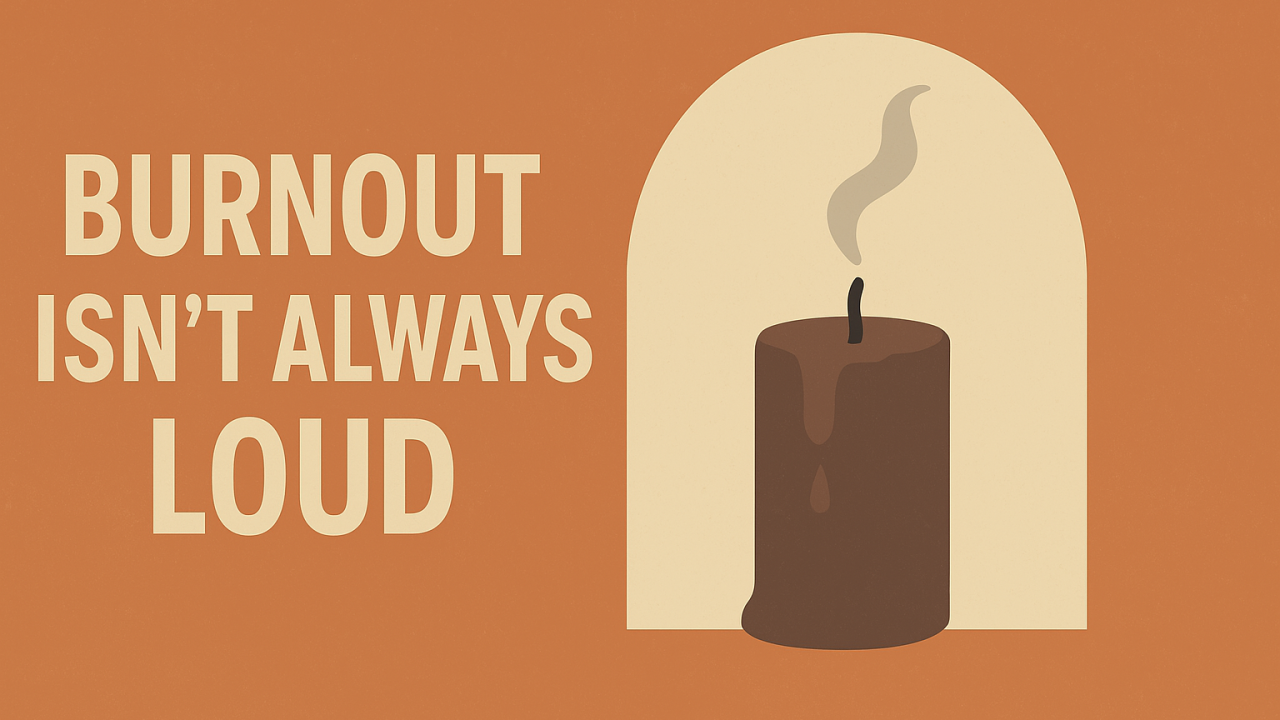
Burnout isn’t a dead end. It’s a signal.
When I finally had a moment to breathe—away from the usual demands, in a different work culture—I could see it more clearly. I wasn’t failing. I wasn’t weak. I was overwhelmed. Too close to the work and carrying too much — without enough separation.
And while I’d love to tell you that one weekend changed everything, it didn’t. But it did help me name what was happening, which meant I could do something.
Three things I check when burnout creeps in:
- Environment – What about my surroundings is contributing to the pressure? Are my systems and support structures actually working for me?
- Objectivity – Am I reacting emotionally to something I don’t own? Who can offer me a perspective I trust?
- Representation – Am I seeing examples of people who’ve navigated this well? Am I reminding myself that even strong leaders can feel this way?
Burnout doesn’t mean you’re broken. Burnout means you’re human. And with the right insight, support, and clarity, it can become a powerful invitation to change.
The weight is still there sometimes—but now, I notice it earlier. I recalibrate. I ask better questions. I remember that I have agency in how I show up, and that burnout doesn’t get the final say.