

By: Tiffany Neill, Lautman Maska Neill & Company
If the last few years in the nonprofit industry have taught us nothing else, we have learned that to be able to relentlessly pursue your mission and be resilient in the face of outside factors, an organization must have a diversified funding base.
Just last year, organizations who had relied on federal government funding for years to fuel their missions, found themselves faced with grants cut overnight. Organizations who received mega gifts from angel investors, faced funding cliffs as the last dollars of these gifts were spent. Groups who depended on contributions from large numbers of donors found themselves facing shifts in traditional philanthropy.
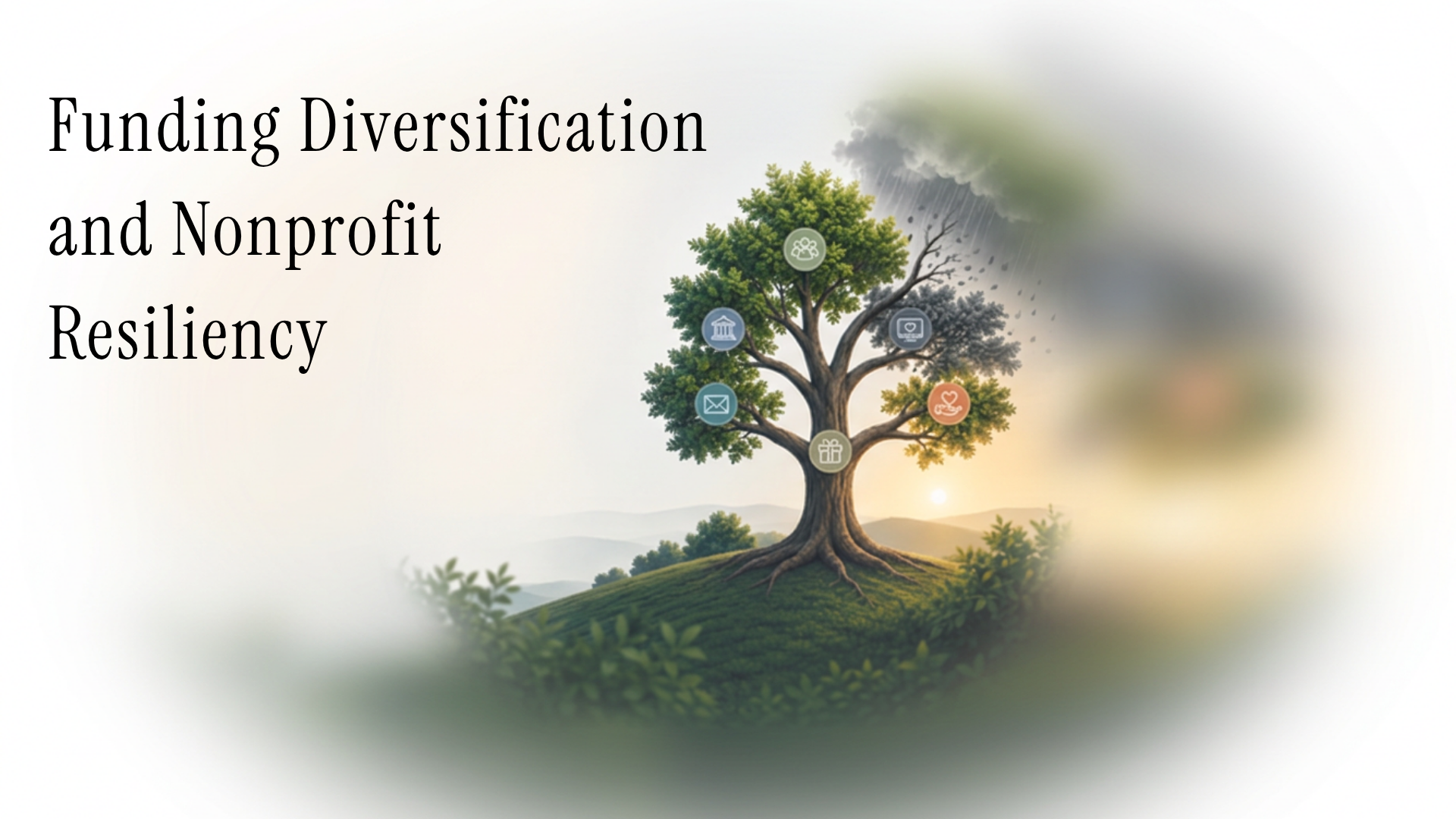
Organizations with extremely diverse funding base found themselves able to shift where they spent fundraising dollars quickly and maintain the overall funding they needed to weather literal and other storms. These were the groups with a mix of grants (government and foundation), a mix of donors ($10 donors to $10 million donors), a mix of communication channels (reaching donors online and offline, in person and on the phone, through text and at events), and a mix of ways to give (through donor advised funds, stocks, and cyber contributions).
For an organization with reliance on a few channels or types of gifts, it may feel dauting to consider diversification. Any growth or shift requires an investment, and with mission-work more critical than ever, shifting program spending to fundraising can be very difficult.
The first place to start is often in conversations with other leaders at nonprofits and for-profit firms who focus on nonprofits. As the latest Giving USA data revealed, the number of nonprofit organizations continues to climb. It’s important to look at the industry in terms of “raising all boats” and getting to know other organizations too. Without sharing anything confidential, they can share overall trends in donor behavior and help you stay abreast of changes impacting philanthropy.
Next, it is always good to work with professionals to create a multi-year projection (including benchmarks) for any new funding avenues you want to pursue.
For example, if you decide to expand the number of individual donors you have, a good partner can build a multi-year projection to show the investment, income, and number of donors each year. With this projection in hand, you can guide conversations with your board, so they understand the investment. You also will know when the efforts are not working. When benchmarks are missed, you can adjust the plan accordingly, so you do not continue to invest in a way that may not result in a return.
Increasing the number of individual donors to an organization can come with an added element of funding diversification: giving channel diversity. In 2021, organizations whose individual giving program relied entirely on direct mail found themselves facing challenges as postage costs increased and paper became scarcer. Those who invested in acquiring and keeping donors in different channels (online, face-to-face (canvassing), phone, text, etc.) were able to shift channels quickly and keep donors engaged.
A good partner can help an organization build an investment plan for channel diversification as well as donor-type diversification. A good individual donor investment model includes projected cost for each donor acquired in each channel, and projections for when that investment will return a net profit. Following those benchmarks allows an organization to increase or decrease funding by channel depending on market conditions.
A reliable projection can also help if you are building a development department so you can set goals by region, size of donor, or even type of gift. More and more organizations are developing plans to ensure they maximize the non-cash contributions they receive. When consumer confidence is low, focusing donors on non-cash gifts (such as the money they already put in a donor advised fund or qualified charitable donations from 401K distributions they don’t need) can provide much-needed funding regardless of the economic situation.
As you can see, the theme is to have a clear plan and stick to it as much as possible as an organization diversifies funding.
One irony is that a plan can include the unexpected. For organizations who experience “surge” moments for individual donors (for example an international relief organization seeing a dramatic uptick in gifts online during an international crises), having a plan for how to retain those surge donors is critical. Without it, these donors may be treated as any other donor and an organization may find itself investing more money than these donors will return in the long-term. Testing to determine if it is worth mailing or calling surge donors who gave online provides an organization with critical base information to build a plan.
With any unexpected contributions, thinking through how they are invested in program work vs. administrative growth vs. fundraising investment are important conversations to have with leadership and board. Some organizations see one-time unexpected gifts as a sustainable growth moment when it isn’t. Having a revenue diversification multi-year plan that accounts for unexpected funding moments can ensure resiliency past that moment.